5 Tips to Inclusion, Belonging & Autonomy

Storytime: Years ago, I spent three months at an orthodontist office, and those three months were agonizing (while desperately throwing my resume into every listed link on Indeed and Linkedin in the South Bay Area). I was socially punished for choosing how to spend my breaks, which were meant to be a brief moment to recollect myself after hours of phone calls with entitled clients. These were clients who struggled with flexibility because they had been taught that “no” is merely an invitation to push harder until they receive an answer that best serves them selfishly, regardless of anyone else’s priorities.
I would often look forward to my 30-minute unpaid lunch break. It gave me an opportunity to walk 5 minutes across the street at a nearby café, learning how to code (something I actually became pretty good at) because I wanted to expand my own opportunities while suffering at this independent practice. Apparently, self-improvement during unpaid time was a red flag for everyone. Anytime I returned to the office on time and ready to take on more phone calls and scheduling requests, I was still labeled as “not part of the team” by the main orthodontist and accused of “not trying to get to know anyone…” My autonomy was quietly revoked and replaced with the vague accusation of not being a “team player.”
During the rush of the shifts or clocking out, I learned a lot of things about the team such as:
I learned that the main orthodontist had a family and two dogs.
I learned that the accounting lady had a daughter who picked out her hair accessories, specifically the pearly clips.
I learned that one of the assistants regularly rode motorcycles.
and that another assistant, the lead, was in the process of moving out of state.
The only thing they learned about me was that I was a musician. They never asked anything beyond that. Which I thought was appropriate information…yet…
…mind you…
No one ever invited me to sit with them at lunch.
No one asked me beforehand if I wanted to spend that time together.
Yet I was somehow expected to instinctively know that choosing how to spend my unpaid thirty minutes would be taken as a personal betrayal. Instead, I experienced what felt like behavioral retaliation. I was iced out, my personality was picked apart as flaws, and harmless choices in the midst of my work were reframed as character flaws. Wearing a Sailor Moon pin, for example, was apparently evidence of being strange and childish. I still attempted small talk and casual conversation to connect with the team despite not joining them for lunch, but nothing seemed to land. The passive and subtle aggressive decision had already been made on how I were to be treated hereonout.
For context, this “team” consisted of one licensed ortho with his own office, one scheduler with their own office, and three to five assistants. I, on the other hand, was expected to eat lunch in a ten by ten room at a four by four table with six people and barely enough space to breathe, let alone decompress. It was deeply uncomfortable. All of this existed alongside a pretend version of reality where discrimination and tension didn’t exist, but my personal life was somehow open season to shoot down. Any mention of my partner (to them “boyfriend” was assumed that he was recurring problem (projection of their own romances), my nonexistent, hypothetical and superficial wedding plans were a frequent topic (although I am not interested in marriage), and my musicianship was something I was expected to explain to non musicians, which I have learned is less curiosity and more things for these folks to misinterpret who I am as a whole.
Because of first lunch I missed, my ability to do my job was suddenly under social scrutiny. Onboarding instructions became inconsistent and, at times, flat out incorrect, shared selectively instead of through a clear and unified process. I was expected to succeed while working with constantly shifting information. Team meetings would happen without announcement, and once I discovered they existed, my failure to sense them was reframed as a personal shortcoming. No one told me there was a meeting nor the frequency of meetings. They just happened. And somehow, that was my fault that I completely missed it. This wasn’t accidental. It was deliberate.
The final straw came when I was prohibited from drinking water at the front desk. That decision resulted in a severe urinary tract infection. By the time I was able to seek treatment, I was pissing blood. Even then, the primary concern remained whether I was being a “team player,” not whether I was experiencing a medical emergency.
The mixed signals were impressive. This place branded itself as deeply “team centric,” performatively quirky (my position was the Front Desk Phone Ninja) yet offered no support, no understanding, and no protection. Instead, the focus was on hazing, projection, and maintaining a hierarchy built on tenure rather than decency.
Everyone else had been there for years. I had been there for months, and apparently that made me worthless (but they still hired me…I guess).
Teams overcome obstacles together. This wasn’t a team. It was a homogenous group of bullies.
When I finally quit, they asked for my honest feedback about why I was leaving. It was not a safe space for a ‘real’ answer. The environment was suffocating, and I had learned by then that authenticity came with consequences. I stayed overly polite, deliberately vague, and careful not to trigger further retaliation, like sudden termination or interference with my next role. My next steps were none of their business. They didn’t want to know me while I was there, so they didn’t earn access to anything meaningful once I left. To further the damage on how mean they were, they made me work during their holiday party (which was my last day), where they had the party in the waiting room (instead of choosing an offsite location), and while the head ortho was giving out gift cards to his team, he made it clear “You don’t get one because YOU’RE leaving”.
It was cruel. He was trying to be funny but it was a reflection on how he saw people he invited into his practice. Just a tool for his own gain and not really conducting himself as team player. Just a ruthless coach who enjoyed putting others in their place. In order for a coach to run a successful game, he needs players who can get along with each other no matter the struggle.
While this wasn’t my first experience with workplace bullying, it did leave me with something useful. I walked away with five hard learned lessons on how to create a sense of belonging, especially in spaces where a “team” already exists but humanity clearly does not.
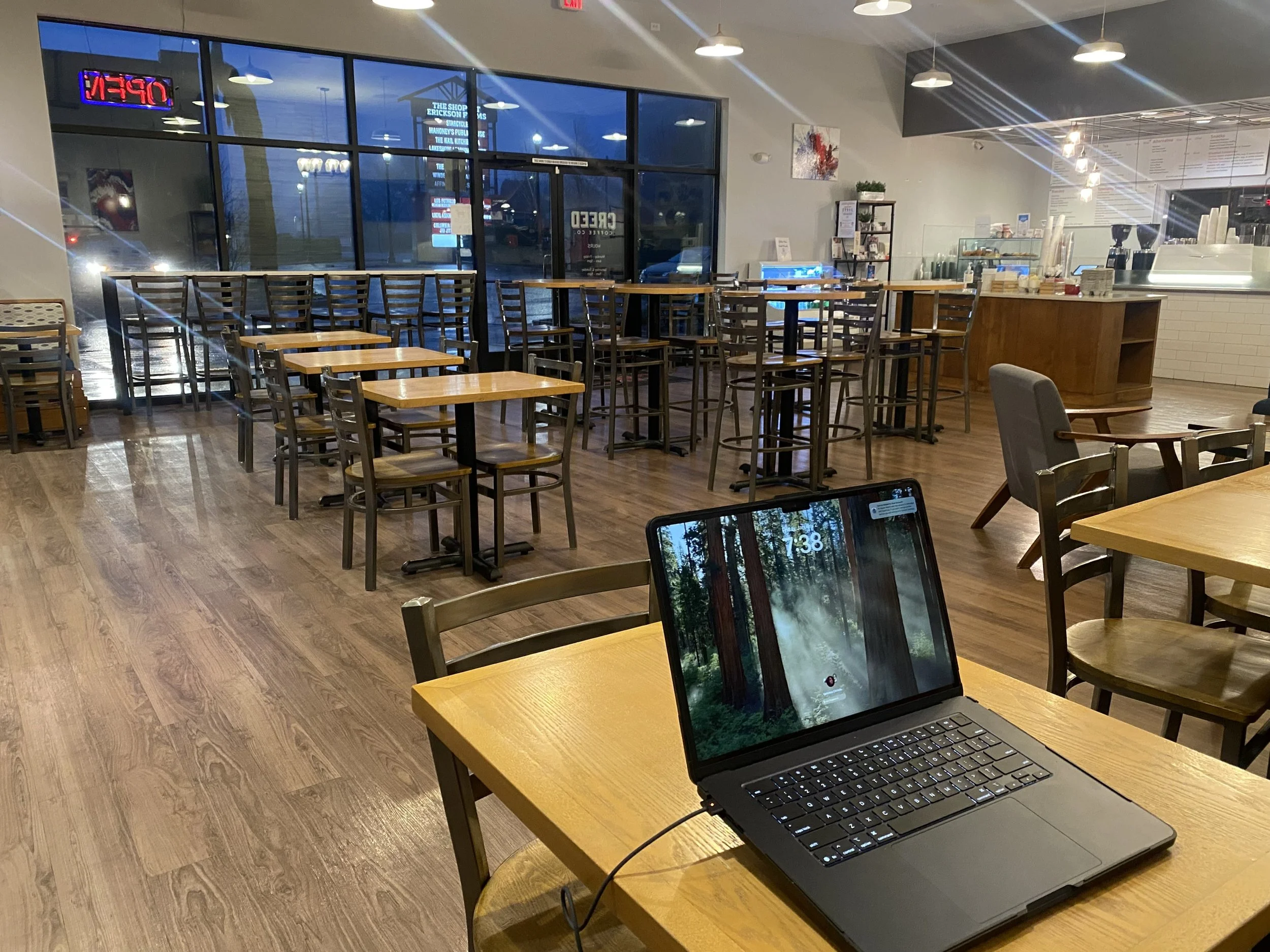
Lastly, I have the pleasure to be writing this article, in a cafe, next to my part-time job during my unpaid break. I have not received any hassle from this new team about my adequacy on working with them and the clients are ~actually really nice and gentle.
1. Create an Onboarding Checklist
An onboarding checklist sets the stage for success. It reinforces great first impressions, shows intentional investment in your new team member, and creates a consistent, welcoming experience. Bonus: it clearly connects their role to the bigger picture, helping them see how their work makes an impact from day one.
2. Be Obvious with Inclusion (Gatherings, Meetings, Holiday Parties)
Inclusion works best when it’s loud and proud. Make it easy for everyone to “open the door” and feel welcome. This can look like sharing announcements widely, reinforcing invites through calendars, checking in to see who’s coming (even if its awkward or unsolicited), or simply reassuring someone that they’re always welcome—no pressure, no expectations, just an open invite.
3. Schedule Regular Check-ins
Check-ins can feel intimidating when they’re unpredictable, so make them routine. A steady cadence helps remove doubt, reduce overthinking, and replace anxiety with clarity. Consistency here builds trust and keeps communication feeling supportive, not stressful.
4. Offer a Buddy System (Set Workplace Expectation: “Be a Buddy, Not a Bully”)
Let’s make it clear and intentional. Pair new team members with a buddy and set the expectation upfront: this is about support, encouragement, and shared learning. No guessing, no awkwardness, just a friendly go-to person from day one. Bonus: Create a welcoming committee of a small core of team members who want to support this. By allowing this to be employee led it reinforces a positive work culture instead of something that feels forced and performative by leadership teams.
5. Advocate “Me Time”
Encourage everyone to actually use their PTO and sick time. As leaders, we can also build flexibility into holiday schedules—because not everyone celebrates the same days, and choice matters. Advocating for rest helps reset the nervous system and reminds people they’re trusted. A motivated team is a rested team.
To support this, normalize boundaries:
Add to email signatures like: “Not urgent—please respond when you return. Enjoy your time!”
Set clear expectations as a team leader: no replying to emails on days off, no texts unless truly urgent not to just get a “quick answer”.
As a team lead, enforce blackout periods where emails are drafted, not sent, during weekends or non-working hours.